Yes or No Spinner – Free Random Choice Tool
A Yes or No Spinner is a simple tool that helps you make a quick choice when you are stuck between two options. Instead of thinking too much, guessing, or asking someone else, you can spin a wheel and get a random “yes” or “no” answer in seconds.
This kind of random choice generator is useful for everyday decisions, games, classroom activities, team icebreakers, and fun challenges. It does not replace serious thinking, but it can make small decisions faster, easier, and more enjoyable.
What Is a Yes-or-No Spinner?
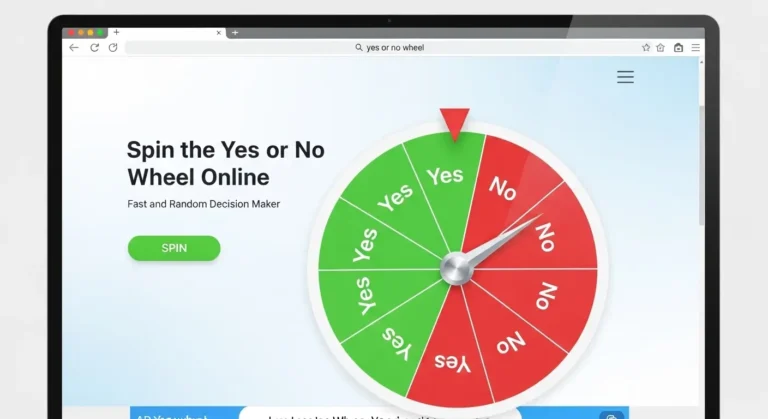
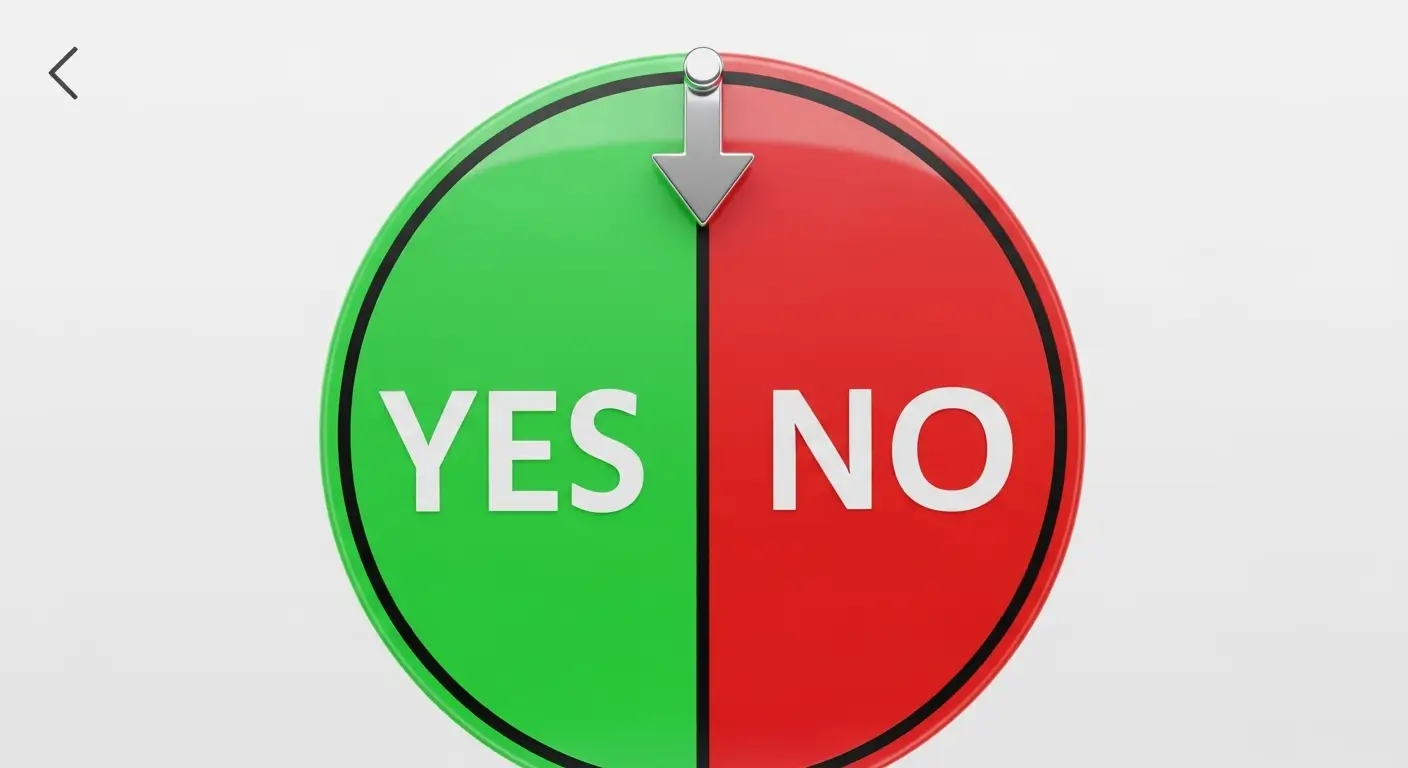
A Yes or No Spinner is an online decision wheel that randomly chooses between “yes” and “no.” You click a button, the spinner moves, and the result appears when it stops.
The idea is very simple. You ask a question that has only two possible answers. Then the tool gives one answer at random. For example:
- Should I go for a walk?
- Should we play another round?
- Should I choose option A?
- Should I start this task now?
A Yes or No Spinner is often used when the decision is small, low-risk, or meant to be fun. It gives you a fair result without needing coins, dice, cards, or complicated apps.
How Does a Yes or No Spinner Work?
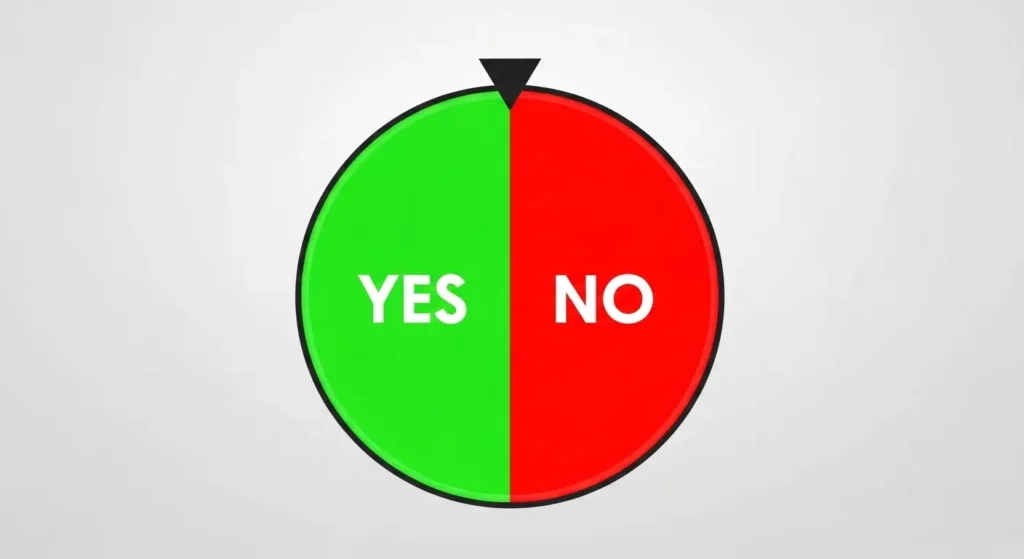
A Yes or No Spinner works like a digital wheel. The wheel is divided into sections, usually one for “yes” and one for “no.” When you spin it, the tool selects one result randomly.
Most online spinner tools follow a basic process:
- You enter or think of a yes-or-no question.
- You click the spin button.
- The wheel rotates for a few seconds.
- The spinner stops on either yes or no.
- You use the result to guide your choice.
The result is random, which means each spin is independent. If the spinner lands on “yes” once, it does not mean the next result will be “no.” Each spin starts fresh.
Why Use a Yes or No Spinner?
A Yes or No Spinner can be helpful when you want a quick answer without stress. Many people overthink small choices, even when the result does not matter much. A spinner removes that pressure.
It is also more fun than simply choosing by yourself. The spinning motion adds excitement, especially in games, classrooms, and group activities.
Here are some common reasons people use it:
- To make small decisions quickly
- To add fun to games and challenges
- To avoid arguments in group choices
- To create random classroom prompts
- To make live streams or videos more interactive
- To help with playful dares and activities
A Yes or No Spinner is best used for light decisions, not major life choices. For serious matters, you should still think carefully and use your judgment.
Best Ways to Use a Yes or No Spinner
A Yes or No Spinner can be used in many simple and creative ways. The key is to ask clear questions that can be answered with yes or no.
For Daily Decisions
Everyday choices can take more time than they should. A random yes or no tool can help when the decision is not too important.
Examples include:
- Should I clean my desk now?
- Should I watch one more episode?
- Should I try a new lunch place?
- Should I take a short break?
This makes ordinary decisions quicker and sometimes more fun.
For Games and Challenges
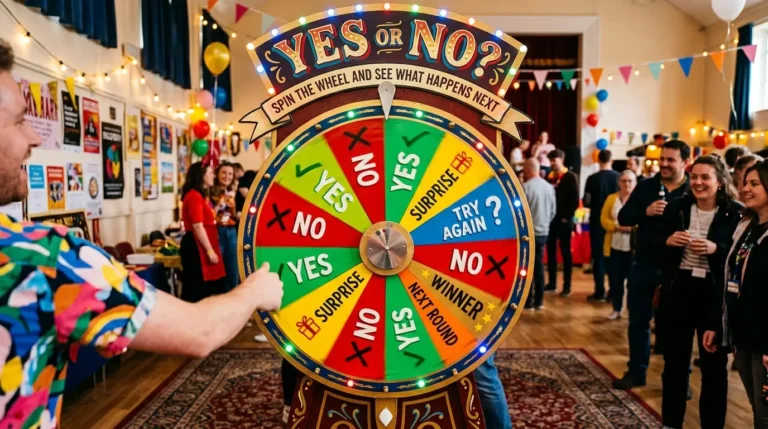
A Yes or No Spinner is perfect for party games, family games, and friendly challenges. It can decide whether someone gets a turn, answers a question, takes a dare, or earns a bonus point.
For example, on a game night, players can ask:
- Can I get one extra turn?
- Should the next round be harder?
- Should I swap teams?
- Should we add a new rule?
Because the result is random, everyone gets a fair chance.
For Teachers and Classrooms
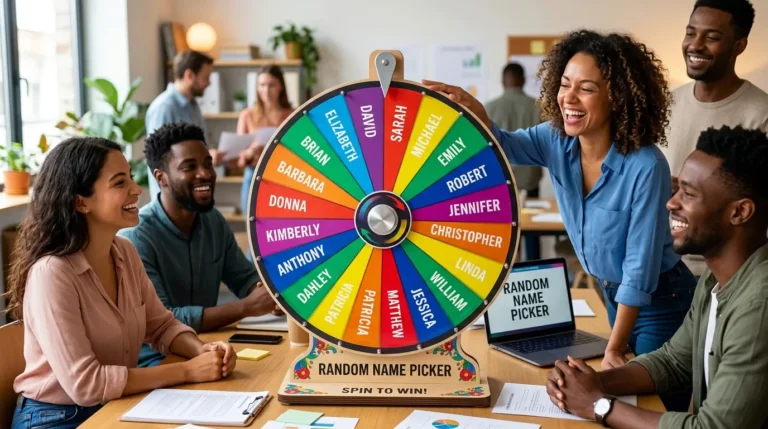
Teachers can use a spinner to make lessons more interactive. It can help students participate without feeling pressured.
Classroom uses include:
- Choosing whether a student answers a bonus question
- Deciding if the class gets another example
- Starting quick review games
- Making warm-up activities more exciting
- Adding variety to group work
A Yes or No Spinner can also help shy students because the decision comes from the tool, not from the teacher choosing someone directly.
For Work and Team Activities
In a workplace, a yes or no wheel can be used during informal meetings, team-building activities, and brainstorming sessions. It should not decide serious business matters, but it can make small activities more engaging.
For example:
- Should we start with a quick icebreaker?
- Should this idea move to the next round?
- Should we vote again after the discussion?
- Should the team try a fun challenge today?
Used carefully, it can bring energy to a group without wasting time.
When Should You Not Use a Yes or No Spinner?
A Yes or No Spinner is useful, but it is not right for every situation. Some decisions need research, planning, discussion, or expert advice.
You should not use a spinner for choices related to:
| Situation | Why a Spinner Is Not Suitable |
|---|---|
| Health decisions | Medical choices need professional guidance |
| Legal matters | Legal issues require proper advice |
| Financial risks | Money decisions should be planned carefully |
| Safety concerns | Safety should never depend on chance |
| Major life choices | Big decisions need thought and responsibility |
A spinner is great for fun and simple choices. It should not replace common sense.
Benefits of Using a Yes or No Spinner
A Yes or No Spinner offers more than a random answer. It can save time, reduce stress, and make activities more interesting.
It Saves Time
Small choices can slow you down. A spinner gives an instant answer, so you can move forward without spending too much time deciding.
It Feels Fair
In group settings, people may disagree about who should go first or what should happen next. A random choice generator gives everyone the same chance.
It Makes Activities Fun
The spinning effect creates suspense. Even a simple yes or no result feels exciting when everyone is waiting to see where the wheel stops.
It Reduces Overthinking
Some decisions do not need deep analysis. A Yes or No Spinner helps you stop overthinking and take action.
It Is Easy for Everyone
You do not need special skills to use it. Beginners, students, parents, teachers, and teams can all understand it right away.
Yes or No Spinner vs Coin Flip
A coin flip and a spinner are similar because both give two possible results. However, they feel different in use.
| Feature | Yes or No Spinner | Coin Flip |
|---|---|---|
| Result type | Yes or no | Heads or tails |
| Visual effect | Spinning wheel | Flipping coin |
| Best for | Online games, classrooms, choices | Quick physical decisions |
| Custom feel | More engaging | Very simple |
| Group use | Easy to show on screen | Harder for large groups |
A Yes or No Spinner is often better when you want something visual, shareable, and easy to use on a phone, tablet, or computer.
How to Ask Better Questions
The quality of the result depends on the quality of the question. If your question is unclear, the answer may not help.
Good questions are direct, simple, and limited to two possible answers.
Good Question Examples
- Should I start this task now?
- Should we play the next round?
- Should I pick the blue option?
- Should the team take a five-minute break?
Weak Question Examples
- What should I do today?
- Which option is best?
- Where should we go?
- How can I improve this?
These weak questions are not suitable because they need more than a yes or no. A Yes or No Spinner works best when the question is clear and direct.
Creative Ideas for Using a Yes or No Spinner
You can use a spinner in more ways than simple decision-making. It can become part of games, content, learning, and daily routines.
Family Fun
Families can use it to decide on small activities, such as whether to play a board game, bake something, or have a movie night. Kids often enjoy the suspense of waiting for the result.
Social Media Content
Creators can use a Yes or No Spinner for challenges, polls, reaction videos, and audience interaction. For example, a creator might ask, “Should I try this food?” and let the spinner decide.
Study Sessions
Students can use it to make study time more active. For example, they can ask whether to review another flashcard set or take a short break.
Fitness Challenges
A spinner can add fun to light fitness routines. You can ask, “Should I do another set?” or “Should I try a new exercise today?” Just remember to listen to your body and avoid unsafe choices.
Habit Building
For simple habits, the tool can create a small push. If you ask, “Should I tidy my room for five minutes?” and the answer is yes, you may feel more motivated to start.
Features of a Good Yes or No Spinner Tool
Not all spinner tools feel the same. A good one should be simple, fast, and easy to use.
Here are useful features to look for:
- Clean design
- Fast loading speed
- Clear yes and no results
- Smooth spinning animation
- Mobile-friendly layout
- No confusing steps
- Easy replay or spin button again
- Fair random selection
A Yes or No Spinner should not make the process harder. The best tools are simple enough for anyone to use within seconds.
Is a Yes or No Spinner Truly Random?
Most online spinners use random selection methods to choose the final result. This means the tool does not “know” what answer you want. It simply chooses between yes and no.
In a basic spinner with two equal sections, both answers should have the same chance. That means:
| Result | Chance |
|---|---|
| Yes | 50% |
| No | 50% |
However, some tools may allow custom settings. If the wheel has more “yes” sections than “no” sections, the chance of landing on yes becomes higher. For a fair result, both options should be balanced.
A Yes or No Spinner is random enough for games, fun choices, and casual decisions. For professional testing or scientific use, more advanced random tools may be needed.
Tips for Getting the Best Result
Using a spinner is simple, but a few tips can make it more useful.
Decide Before You Spin
Before spinning, agree that you will accept the result. This prevents second-guessing after the answer appears.
Use It for Low-Risk Choices
A Yes or No Spinner is best for fun, simple, and casual decisions. Avoid using it for anything that could cause harm, stress, or serious loss.
Ask One Question at a Time
Do not ask a question with hidden extra choices. Keep it focused.
Instead of asking, “Should I go out, buy food, and meet a friend?” ask one question first: “Should I go out?”
Respect the Result, But Use Common Sense
Random results can be fun, but they are not always wise. If the answer feels wrong for a good reason, pause and think again.
Common Mistakes to Avoid
A Yes or No Spinner is easy to use, but people sometimes make simple mistakes that reduce its value.
Asking Unclear Questions
If your question is not clear, the result will not help. Always make sure it can be answered with yes or no.
Using It for Serious Problems
A spinner should not decide important matters. It is a fun decision maker, not a replacement for careful thinking.
Spinning Too Many Times
If you keep spinning until you get the answer you want, the tool loses its purpose. One spin is usually enough.
Ignoring Context
Sometimes the right answer depends on time, money, safety, or other people. A random yes or no result cannot understand those details.
Who Can Use a Yes or No Spinner?
A Yes or No Spinner can be used by almost anyone. It is simple, flexible, and easy to understand.
| User Type | Common Use |
|---|---|
| Students | Study breaks, games, quick choices |
| Teachers | Classroom activities and review games |
| Parents | Family decisions and fun challenges |
| Friends | Party games and dares |
| Teams | Icebreakers and light activities |
| Creators | Interactive content and challenges |
Because it works in many situations, it has become a popular online decision maker for casual use.
Why People Enjoy Random Choice Tools
People enjoy random tools because they remove pressure. When a choice is not serious, randomness can feel refreshing. It turns a boring decision into a small moment of surprise.
A Yes or No Spinner also permits people to act. Sometimes you already want to do something, but you need a small push. When the spinner lands on yes, it can feel like a playful sign to begin.
At the same time, a “no” answer can help you pause. It may make you think, “Do I really want this?” That reaction can reveal what you actually prefer.
Using a Spinner for Better Group Decisions
Group decisions can become slow when everyone has a different opinion. For small matters, a random decision wheel can keep things moving.
For example, friends may use it to decide:
- Should we start the game now?
- Should the loser choose the next song?
- Should we order dessert?
- Should we add a bonus round?
A Yes or No Spinner works well here because it feels neutral. Nobody has to take the blame for the answer, and the group can enjoy the result together.
Can a Yes or No Spinner Help With Productivity?
A spinner can help with productivity when you use it for small actions. It can reduce hesitation and help you start.
For example, you might ask:
- Should I reply to this email now?
- Should I organize my notes?
- Should I work for another ten minutes?
- Should I take a short break?
This works because many productivity problems begin with delay. A quick, random answer can break that delay. Still, important tasks should be handled with planning, not only chance.
A Yes or No Spinner can support productivity, but it should not control your schedule. Use it as a gentle push, not as your main planning system.
Simple Rules for Safe and Smart Use
To get the most value, follow a few simple rules:
- Use it for fun or low-risk choices.
- Ask clear yes-or-no questions.
- Spin once and accept the answer when possible.
- Do not use it for health, legal, safety, or money decisions.
- Use common sense if the result feels unsuitable.
- Keep it light, fair, and enjoyable.
A Yes or No Spinner is most useful when it adds fun and removes stress without creating problems.
FAQ
What is a Yes or No Spinner?
A Yes or No Spinner is a random decision tool that quickly gives either a yes or a no answer.
Is a Yes or No Spinner free to use?
Yes, most online Yes or No Spinner tools are free and easy to use on any device.
Can I use a Yes or No Spinner for important decisions?
No, it is best for fun and simple choices, not serious life, money, health, or safety decisions.
Is a Yes or No Spinner fair?
Yes, it is fair when both yes and no have an equal chance of being selected.
Where can I use a Yes or No Spinner?
You can use a Yes or No Spinner for games, classrooms, daily choices, team activities, and fun challenges.
Conclusion
A Yes or No Spinner is a simple, fun, and helpful tool for making quick choices without stress. It works best for casual decisions, games, classrooms, and group activities where fairness and speed matter. By asking clear questions and using common sense, you can enjoy random answers while keeping important decisions thoughtful, safe, and responsible every time.